
Beyond the Spreadsheet: 7 Key Signs Your Business Needs Custom Software

David Okosun
Founder · 8 July 2025 · 6 min read
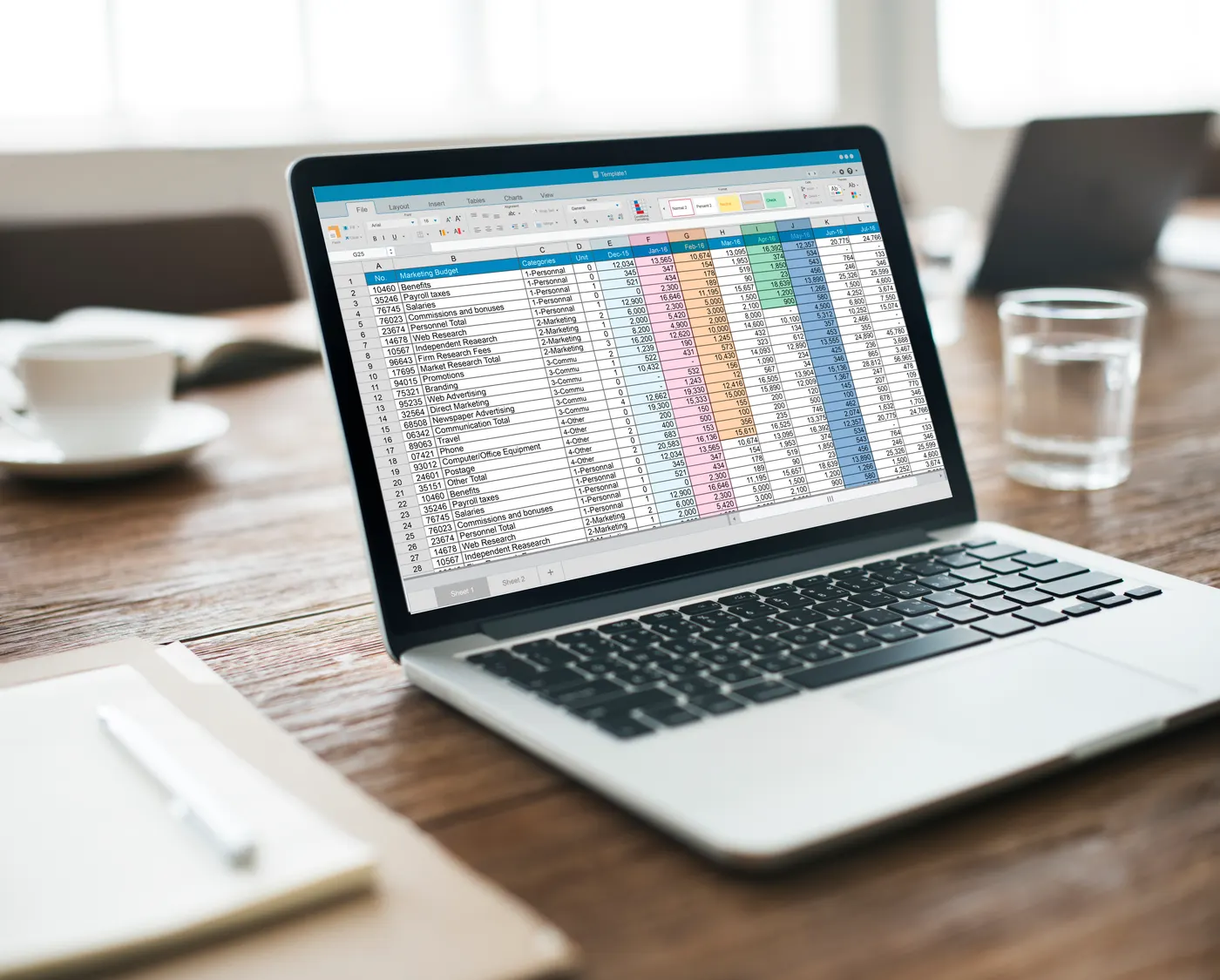
Spreadsheets are the duct tape of the business world. Cheap, familiar, holds together almost anything. Most companies run on them far longer than they should, and for a while that’s fine. Then one day the duct tape is the only thing holding up something load-bearing, and you realize nobody planned for it to get this far.
That’s the moment worth catching. Pushing a spreadsheet to do a real application’s job costs you in ways that don’t show up on an invoice: hours lost to manual fixes, decisions made on stale numbers, the one person who understands “the file” becoming a single point of failure. Below are seven signs you’ve crossed that line. If a few of them sting, that’s the point.
1. The “master” spreadsheet has become a monster
You know the one. It started as a tracker. Now it has thirty tabs, a few thousand rows, formulas referencing other formulas referencing a tab someone hid in 2022, and conditional formatting that looks like a heat map of someone’s anxiety. It’s mission-critical and it crashes twice a week. And exactly one person actually understands it. When they take a week off, the process stops.
Custom software replaces that one fragile file with an actual database and a screen built for the job. Everyone works off the same data instead of emailing copies around. The database doesn’t care if you have ten thousand records or ten million. And the knowledge lives in the system and the process, not in one person’s head, so onboarding a new hire is training, not an archaeology dig.
2. People are retyping the same data over and over
A customer fills out a form on your site. Someone copies that into the leads sheet. Deal closes, so it gets copied into the clients sheet, then into the invoicing sheet. Three transcriptions of the same name, and at least one of them has a typo. This kind of work is tedious, it’s slow, and it’s the kind of thing you’re paying skilled people to do instead of the work you actually hired them for.
Software fixes this by connecting things. The form feeds the CRM directly. A closed deal triggers the welcome email and creates the task for sales. Data gets entered once and moves through the rest on its own. Fewer hands on it means fewer mistakes, and your team gets those hours back for work that needs a human.
3. You can’t see what’s happening until someone makes a report
Sales numbers in one file, inventory in another, expenses in a third. To know how the business is actually doing, someone has to pull all three together, build the charts, and send it around. By the time it lands in your inbox it’s a week old. You’re steering a car by looking at where the road was last Tuesday.
A custom app with a dashboard shows you the numbers as they move. Sales, revenue, what it costs you to land a customer, whatever you actually watch. You see a dip when it starts, not at the monthly review. And you can check it from your phone on a Sunday if that’s the kind of person you are. (You probably are. You read business blogs on weekends.)
4. Your process doesn’t fit the off-the-shelf tool
You bought the CRM or the project management tool, and it’s almost right. It’s missing a field. It doesn’t handle your pricing the way you price. The report you need isn’t a report it makes. So your team exports to — yeah — a spreadsheet to finish the job. You’re paying a subscription to still be doing it by hand.
Custom software gets built around how you actually work. The weird thing your business does, the thing that’s half the reason customers pick you? The software can lean into that instead of fighting it. And when the way you work changes, the software changes with you. You’re not waiting on some vendor’s roadmap to maybe ship the feature you needed last quarter.
5. Two people can’t work on it at once without chaos
Alice has her copy of the forecast. Bob has his. Within a week there’s Forecast_v2_final.xlsx and Forecast_v3_Bob_edits_FINAL.xlsx in three different email threads and nobody’s sure which one is real. Even the cloud spreadsheets aren’t built for several people genuinely working the same complex data at the same time. Somebody’s edits get clobbered. It happens every time.
A real application sits on a database meant for this. One copy. Everyone’s on it, everyone’s current, no version roulette. You decide who can touch what, so sales updates their pipeline without anyone fat-fingering the finance numbers. And there’s a log: who changed what, when. Handy when something looks off and you need to figure out why.
6. You’re holding sensitive data in a file
A spreadsheet is a file. Files get emailed, copied to a laptop, dropped in a personal Drive folder. If what’s in it is customer PII, payment details, anything health-related, that’s a problem waiting to happen. Good luck enforcing who can open it, and good luck producing a clean access log when an auditor asks. GDPR and HIPAA do not love the words “it’s in a spreadsheet.”
Building your own software means you build the controls in from the start. People see only the data their role needs. It lives in an encrypted database, not scattered across hard drives. Every time someone reads or changes a record, that’s logged — so when compliance asks for the trail, you have one.
7. You’re about to grow, and the current setup won’t survive it
The spreadsheet workflow that worked at five people will not work at twenty. Add customers, add products, add staff, and the manual overhead doesn’t grow with you — it grows faster than you. More to reconcile, more to chase, more places for a number to go wrong. At some point the admin work to keep the spreadsheets honest is its own full-time job, and growth just makes it worse. You can’t build a bigger company on a foundation you have to babysit.
Software gives you something that scales. Automated workflows and a proper database handle ten times the volume without ten times the effort. You can add features as you need them instead of rebuilding from zero. And, honestly — when a customer or a partner sees a real system instead of a shared sheet, it changes how they see you.
Where ByteGears comes in
If you read three of those and winced, that’s usually the sign. We work with SMEs making exactly this jump — out of the spreadsheet sprawl and into something built for how their business actually runs. We map your workflow, automate the parts that are eating people’s time, and give you numbers you can trust without waiting for a report.
You don’t have to let a spreadsheet decide how big you get. Let’s talk and tell us where it’s breaking. We’ll tell you straight whether custom software is worth it for you — and if it’s not, we’ll say so.